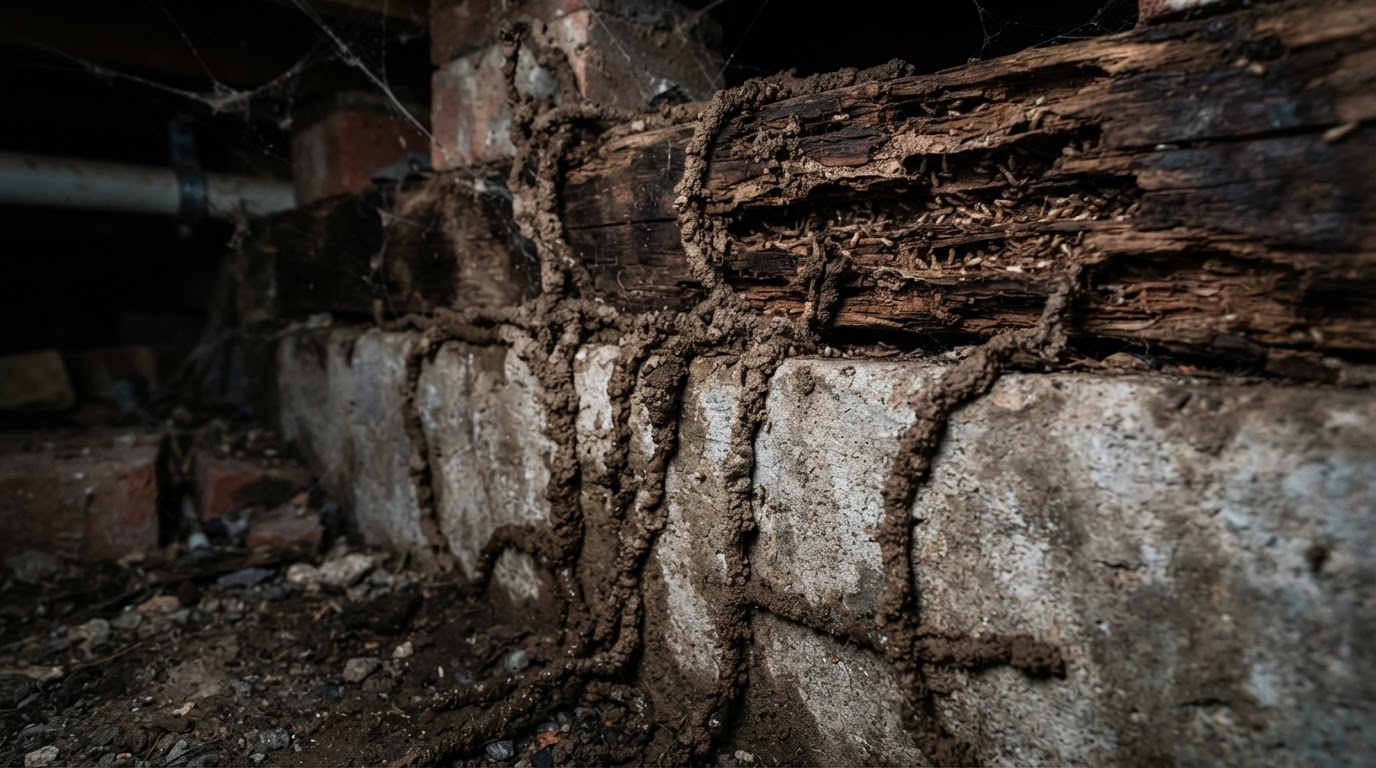
Common signs
- Risk factors rather than signs — moisture, timber in soil, concealed subfloor
Typical areas
- Around the foundations
- Gardens, mulch and retaining walls
- Roof space and subfloor ventilation
Reduce what attracts termites
Termites favour moisture and timber in contact with soil. Simple steps — fixing leaks, improving drainage and ventilation, keeping timber off the ground, and being mindful of mulch and retaining timbers near the home — all reduce risk.
Management options
Depending on the home, management options can include installed barriers or monitoring systems. We'll explain what's appropriate for your construction type and whether it's worthwhile given the risk profile.
Inspections are part of prevention
Even with good conditions and management in place, regular inspections catch activity early. For many WA homes an annual inspection is a sensible part of prevention.
After treatment
If you've had treatment, prevention keeps that protection working — maintaining any system installed, keeping conditions unfavourable, and sticking to the recommended inspection schedule.
Practical prevention tips
- Keep timber off the soil — firewood, sleepers and offcuts away from the house
- Fix leaks and improve subfloor drainage and ventilation
- Use mulch sparingly near foundations
- Maintain regular inspections, especially in termite-prone areas
Questions we're asked
Can I make my home termite-proof?
You can't make a home completely termite-proof, but you can meaningfully reduce risk by managing moisture and timber, considering barriers or monitoring, and keeping up inspections.
Is prevention needed if I've had treatment?
Yes. Prevention maintains the protection a treatment provides and reduces the chance of termites returning.