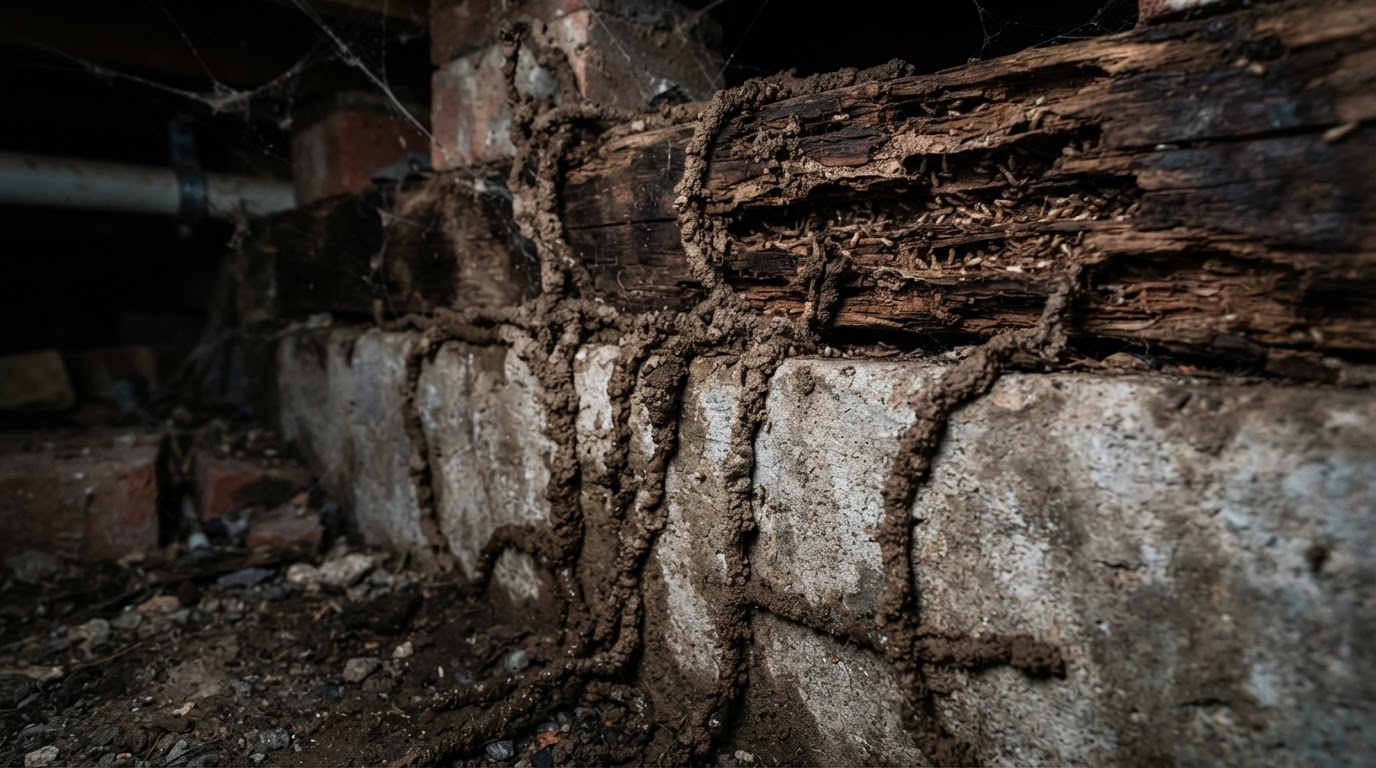
Common signs
- Confirmed live termites
- Active mud tubes
- Freshly damaged timber
Typical areas
- The colony and its pathways
- The building's structural timber
- Soil around the foundations
Treatment options
Common approaches include treated soil barriers around the structure, baiting and monitoring systems, and direct treatment of active areas. The right option depends on the construction, the extent of activity, access and your preferences. We'll explain each option's purpose, limitations and cost implications.
What treatment can and can't do
A treatment addresses the current colony and adds a layer of protection, but no treatment can guarantee termites will never return. Termites are persistent and conditions change. That's why inspection and prevention remain important after treatment.
What to expect
We explain the recommended approach before any work begins, carry out the treatment, and advise on follow-up inspections or monitoring. You'll know what was done, what to watch for, and when to check again.
Don't DIY
Spraying or disturbing termites yourself can scatter the colony and make professional treatment harder. If you find activity, leave it alone and arrange inspection and treatment.
Practical prevention tips
- Follow up treatment with regular inspections
- Maintain any monitoring or barrier system installed
- Address moisture and timber-to-soil contact around the home
- Keep records of treatment for future reference
Questions we're asked
Will one treatment stop termites forever?
No treatment can guarantee permanent protection. Treatment addresses the current colony and adds protection, but ongoing inspection and prevention remain essential.
How soon do termites need treating?
Termites work slowly but steadily, so there's usually no need to panic — but don't delay either. Arrange inspection promptly and treatment soon after if confirmed.