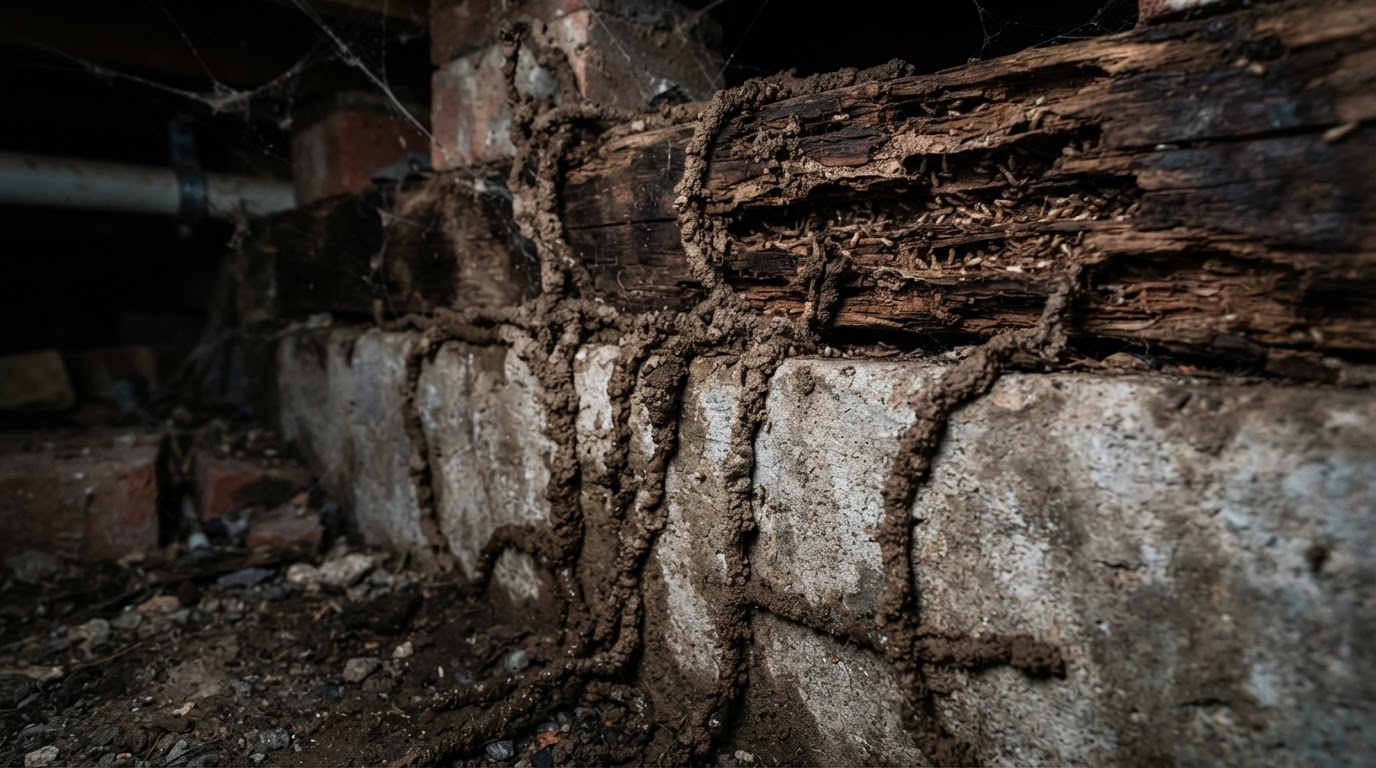
Common signs
- Mud tubes on foundations or walls
- Hollow or soft timber
- Discarded wings near windows
- Moisture or tight-fitting doors
Typical areas
- Subfloor & foundations
- Roof space & internal walls
- External timber, gardens & retaining walls
What an inspection involves
An inspection covers accessible areas of the building and grounds — subfloor, roof space, internal and external walls, and surrounding timber, gardens and structures. We look for live activity, signs such as mud tubes and damaged timber, and conditions that favour termites such as moisture and timber in contact with soil.
What an inspection is not
An inspection is an assessment, not a treatment. It won't stop termites on its own, and it can't detect activity concealed behind walls, under slabs or in areas that can't be accessed. We'll be honest about the limitations of any inspection.
When to arrange one
Common reasons include before buying a home, as an annual check in a termite-prone area, or if you've noticed possible signs. An annual inspection is a sensible precaution for many WA homes.
What you receive
You receive a clear explanation of what was found (or not found), the conditions that may favour termites, and a recommendation on whether treatment or prevention steps are warranted.
Practical prevention tips
- Have an annual inspection in termite-prone areas
- Arrange an inspection before buying a home
- Inspect sooner if you notice any signs of activity
- Don't disturb suspected activity — call for an inspection
Questions we're asked
How long does a termite inspection take?
A thorough inspection of a standard home typically takes an hour or more, depending on the size, access and construction type.
Will an inspection find every termite?
No inspection can guarantee finding all termites, because some areas can't be accessed. We'll explain the limitations clearly and recommend the right next step.