Common signs
- Bites around ankles
- Pets scratching or grooming excessively
- Tiny dark specks in pet bedding
Typical areas
- Carpets & rugs
- Pet bedding & furniture
- Yards and shaded garden areas
Why fleas need several steps
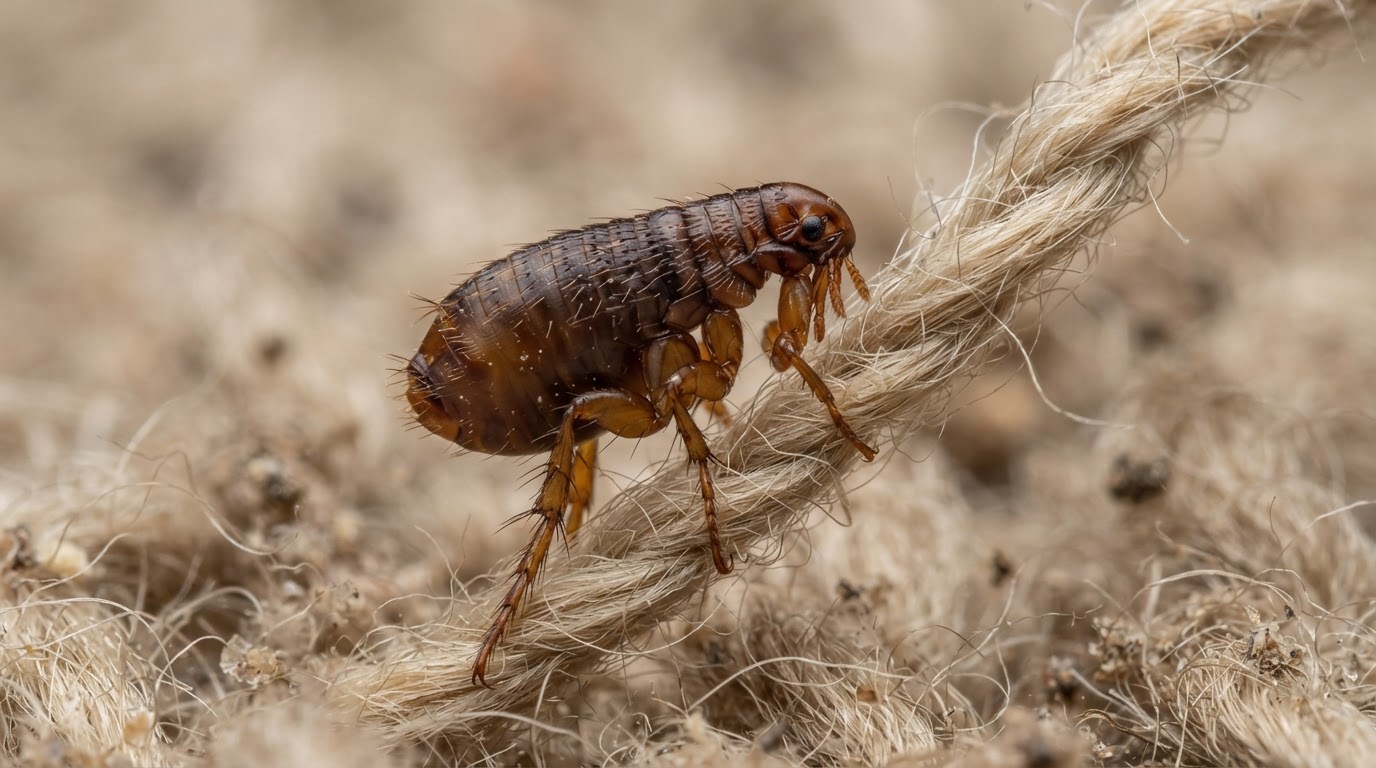
Most of a flea population exists as eggs, larvae and pupae in the environment rather than on the animal. Treating only the pet or only the floor often allows re-infestation. A combined approach is more effective.
How treatment works
We treat carpets, pet resting areas and — where relevant — outdoor areas. We'll explain preparation such as vacuuming beforehand (which stimulates pupae to emerge) and the need to coordinate with your pet's vet treatment.
Important note
We provide environmental treatment, not veterinary advice. Your pet's flea treatment should be discussed with your vet, as the two work together.
Practical prevention tips
- Treat pets year-round as advised by your vet
- Vacuum regularly, especially where pets rest
- Wash pet bedding in hot water
- Keep lawns short in shaded areas
Questions we're asked
Do I still need to treat my pet?
Yes. Environmental treatment and your pet's vet-recommended flea treatment need to work together; one without the other is rarely enough.
Why are fleas still appearing after treatment?
Pupae can emerge over a couple of weeks after treatment. Vacuuming helps stimulate them to hatch so they come into contact with the treated surface.