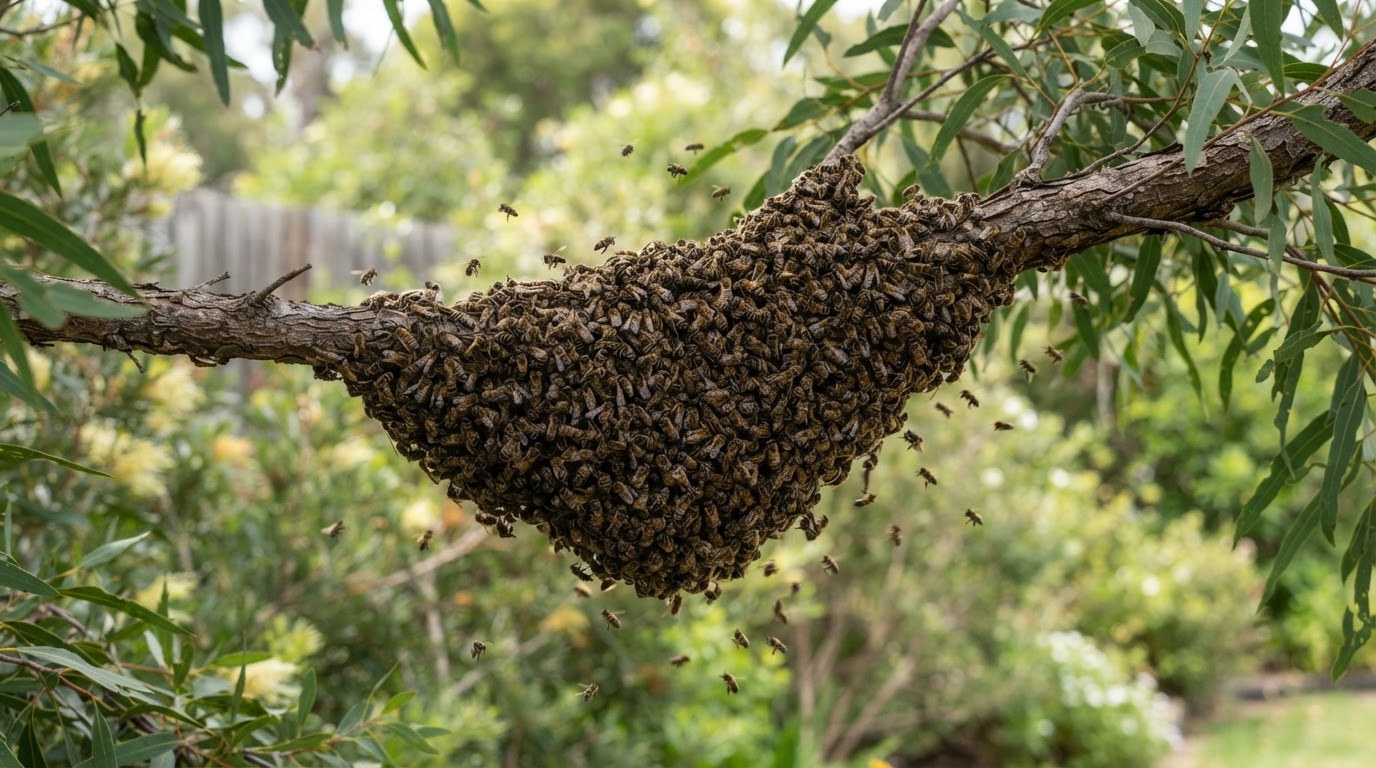
Common signs
- A swarm or cluster on a branch or wall
- A visible hive with steady bee traffic
- Bees entering a gap in a wall or roof
Typical areas
- Eaves & roof spaces
- Trees and shrubs
- Wall cavities
Bees are different from wasps
Bees are robust, fuzzy pollinators essential to gardens and agriculture. Wasps are slimmer, more aggressive and are treated differently. We'll help you tell the difference before deciding what's appropriate.
Relocation where possible
Where circumstances and our service capability allow, live removal or relocation is preferable to extermination — bees are a valuable part of the local environment. The right approach depends on location, accessibility and whether the bees can be safely reached.
When extermination may be considered
In some situations — such as bees established inside a wall cavity where relocation isn't practical and there's a safety risk — a different approach may be warranted. We'll be honest about what we can and can't do, and we never claim a service we don't provide.
Safety
If bees have settled near living areas or play spaces, keep people and pets at a distance and seek advice rather than disturbing the swarm or hive.
Practical prevention tips
- Seal gaps in walls and roof lines early to prevent bees establishing inside
- Don't leave sweet, sticky food uncovered outdoors
- If a swarm arrives, give it space — many swarms move on within a day or two
- Seek advice before attempting any removal yourself
Questions we're asked
Will you kill the bees?
Not by default. We aim for live removal or relocation where we can. Extermination is only considered where relocation isn't practical and there's a genuine safety risk.
A swarm has appeared in my tree — what should I do?
Give it space and watch from a distance. Swarms often move on within a day or two. If it settles and stays, or is near living areas, get in touch for advice.