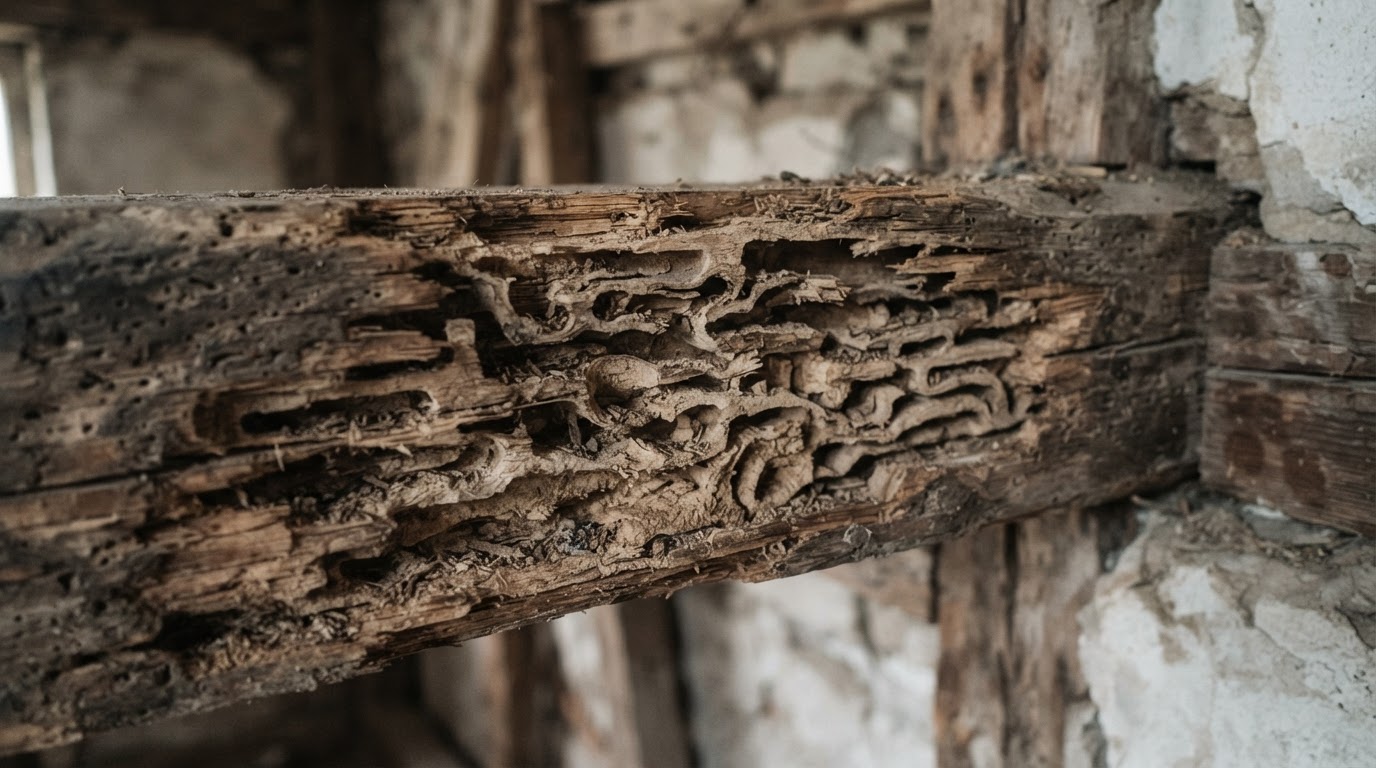
Common signs
- Visible timber damage of uncertain cause
Typical areas
- Structural and decorative timber
- Subfloor and roof-space timbers
- Garden and retaining timber
Why the cause matters
Timber can be damaged by termites, moisture, fungal decay, borers or other issues, and each needs a different response. Treating for termites when the cause is actually moisture decay won't solve the problem, so identifying the cause correctly is the first step.
Active termite activity vs old damage
A key distinction is whether termite damage is current or historic. Live termites, fresh mud tubes and soft, damp timber suggest active activity; dry, empty galleries with no live termites may be old damage. Assessment helps determine whether treatment is needed at all.
Moisture damage and timber decay
Moisture and fungal decay can damage timber in ways that look concerning without involving termites. Leaks, poor drainage and ventilation can all cause timber deterioration that requires building or drainage fixes rather than termite treatment.
Borer damage and other timber problems
Borer beetles and other timber pests create their own distinctive damage. Identifying the pest responsible — termite, borer, or fungal decay — determines the right course of action, which is why assessment precedes any recommendation.
Practical prevention tips
- Identify the cause before any treatment is planned
- Fix moisture and drainage issues that damage timber
- Keep up inspections after damage is assessed
- Address conditions that favour whichever issue is found
Questions we're asked
How do I tell old termite damage from active activity?
Live termites, fresh mud tubes and soft, damp timber suggest active activity; dry, empty galleries with no live termites may be historic. A professional assessment helps determine which.
Could the damage be something other than termites?
Yes — moisture, fungal decay, borer beetles and other timber issues can all damage timber. Identifying the cause correctly matters before recommending treatment.