Common signs
- Used for ongoing detection on higher-risk or managed properties
Typical areas
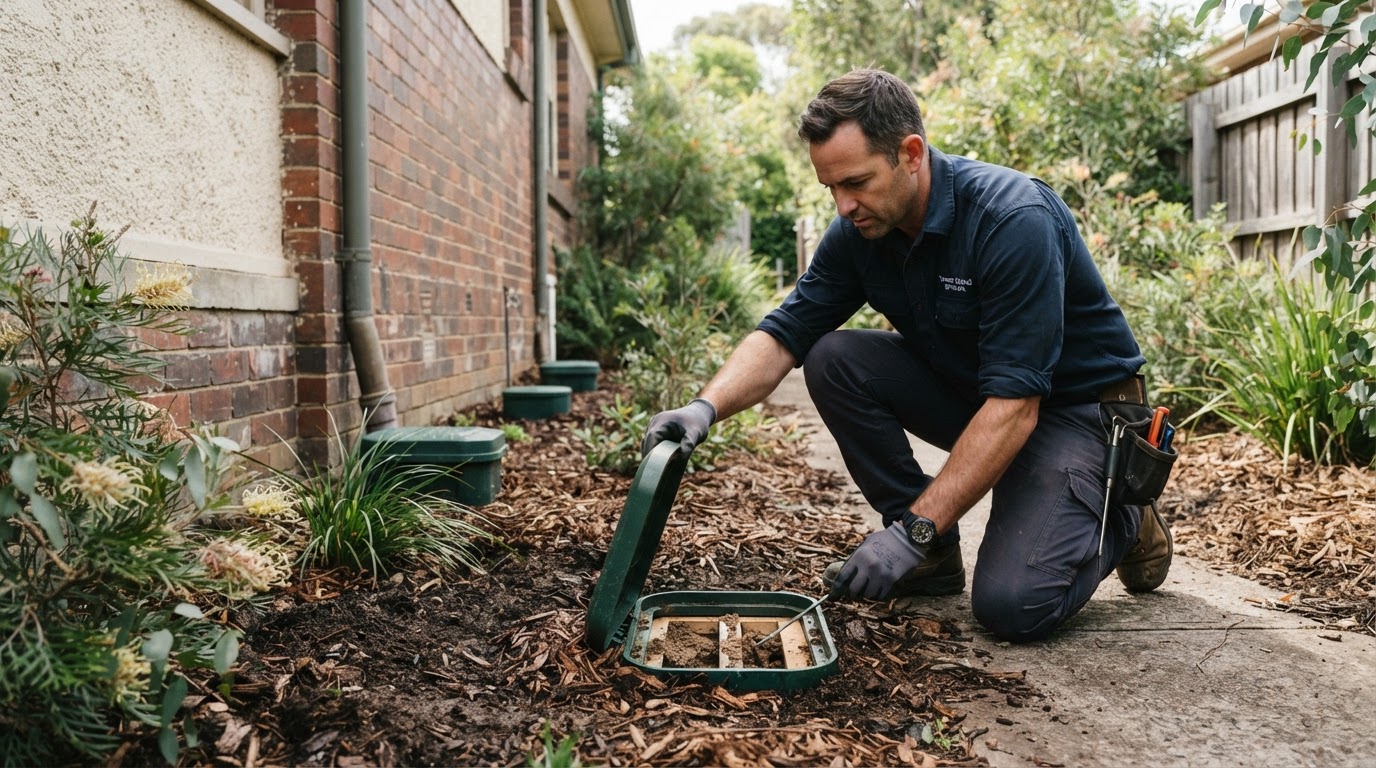
- In-ground stations around the perimeter
- Scheduled inspection intervals
- Part of a broader management plan
What monitoring systems are
Monitoring systems use stations — typically in-ground around the building perimeter — that are inspected on a schedule. The technician checks each station for termite presence, looking for feeding or termites inside the stations.
How monitoring differs from immediate treatment
Monitoring is about detection and ongoing management rather than an immediate chemical application. If termites are found in a station, a treatment such as baiting can follow; if not, monitoring continues, providing early warning of activity.
When monitoring may be appropriate
Monitoring can suit higher-risk properties, homes where a chemical soil zone isn't practical, or as ongoing management after treatment. It can also form part of a broader strategy alongside a barrier or other treatment.
Why scheduled inspections matter
Monitoring only works if stations are inspected regularly. Scheduled visits are what turn a set of stations into an active early-warning system, so attending the recommended inspection schedule is part of making monitoring worthwhile.
Practical prevention tips
- Keep station locations clear for inspection
- Attend scheduled monitoring visits
- Combine with good property conditions
- Keep up broader termite inspections
Questions we're asked
Is monitoring the same as treatment?
No. Monitoring detects activity over time; it isn't an immediate chemical treatment. If termites are found in a station, treatment such as baiting can follow.
Do I need monitoring if I've had treatment?
Monitoring can form part of ongoing management after treatment, especially for higher-risk properties. Whether it's worthwhile depends on the property and the system installed.