Common signs
- Risk-based option rather than a sign — used where a continuous soil zone can be treated
Typical areas
- Soil around the building perimeter
- Subfloor soil (where accessible)
- Trenches and injection points along foundations
How it works
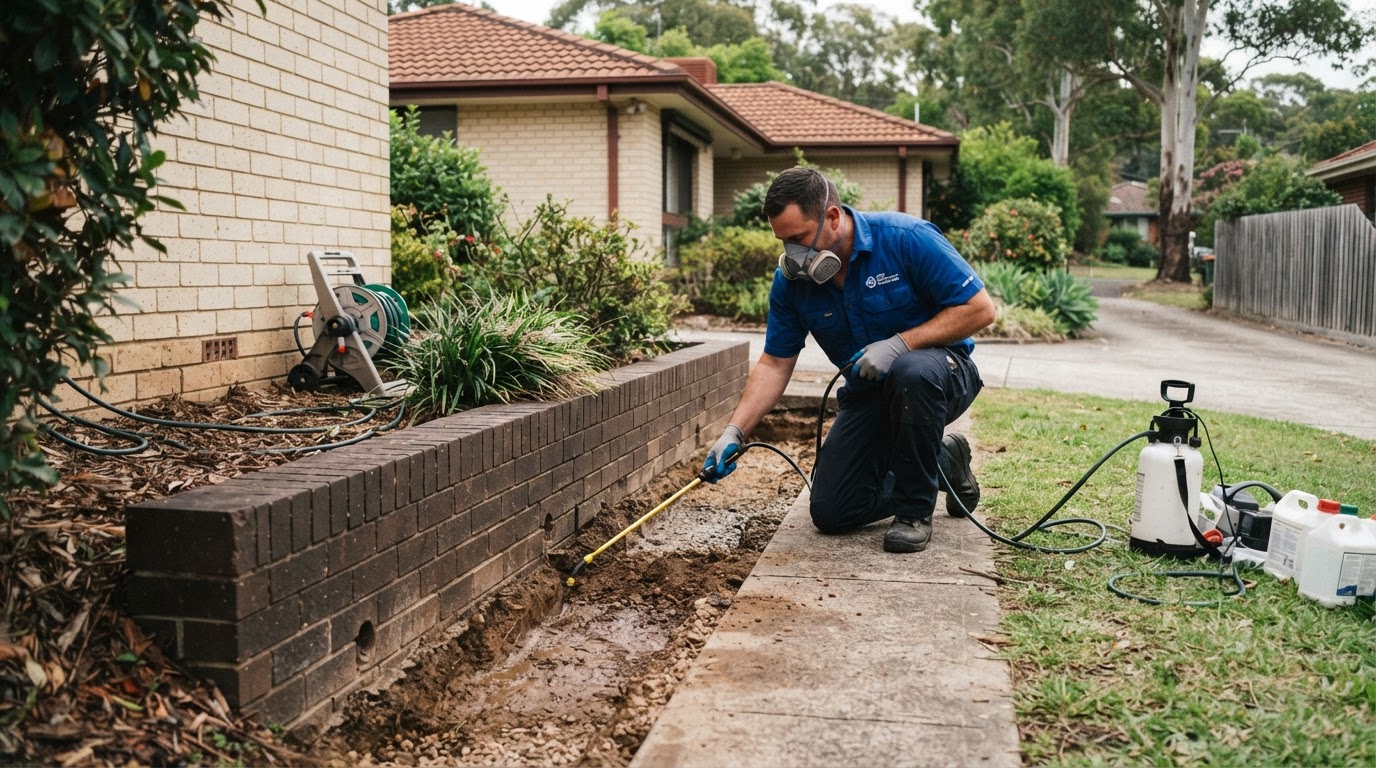
An approved termiticide is applied to appropriate soil areas around or beneath the building to form a continuous treated zone. Termites attempting to pass through this zone encounter the treatment, which helps manage entry. Product choice and application must follow the product label, legislation and professional assessment.
Where it can be used
Chemical soil treatment suits slab homes with treatable perimeter soil, subfloor properties where soil can be accessed, and perimeter areas where a continuous zone can be established. Suitability depends on the construction, foundation type and how accessible the soil is.
Why continuity matters
A treated zone works best when it's continuous. Gaps in treatment — areas of soil that aren't treated — can create potential termite entry routes, which is why thorough, continuous application following the label matters. Access limitations can affect how complete a zone can be.
Repellent and non-repellent termiticides
Some termiticides repel termites from the treated zone, while non-repellent products allow termites to pass through, transferring the active ingredient through termite contact and behaviour. Each has different characteristics; product choice must follow the label, legislation and professional assessment of the property.
Preparation, safety and follow-up
Preparation depends on the site and product and will be explained before work begins. Treatment is carried out following safety requirements and the label, and follow-up inspections remain important afterwards — a treated zone reduces risk but doesn't make a home permanently termite-proof.
Practical prevention tips
- Maintain the treated zone — avoid disturbing perimeter soil unnecessarily
- Keep up regular inspections after treatment
- Address moisture and timber-to-soil contact
- Tell us before any works that disturb soil near the foundations
Questions we're asked
Is chemical termite treatment safe?
When applied according to the product label, legislation and professional assessment, a chemical soil treatment is designed to be used around homes. We explain any safety requirements relevant to your situation before treatment.
How long does a chemical soil treatment last?
The life of a treated zone depends on the product, soil conditions and disturbance, and must be assessed case by case. Regular inspections remain important regardless of the treatment in place.