Common signs
- Mud tubes on foundations or walls
- Hollow or soft-sounding timber
- Discarded wings near windows
- Tight-fitting doors or warped frames
Typical areas
- Subfloor, foundations & perimeter soil
- Roof space & internal wall timbers
- Gardens, trees, stumps & retaining walls
What termite control involves
Termite control is broader than any single treatment. It combines inspection to find activity and risk, a recommendation based on what's actually found, treatment where activity is confirmed, and ongoing inspection or monitoring to catch any change. The goal is informed, property-specific management rather than a one-size-fits-all product.
Why termites are difficult to detect
Termites generally feed concealed inside timber, so damage can be well advanced before it's visible. They keep to the inside of timbers and use mud tubes to travel while staying moist and hidden, which is why an untrained eye can miss activity until significant damage has occurred.
Why professional inspection matters
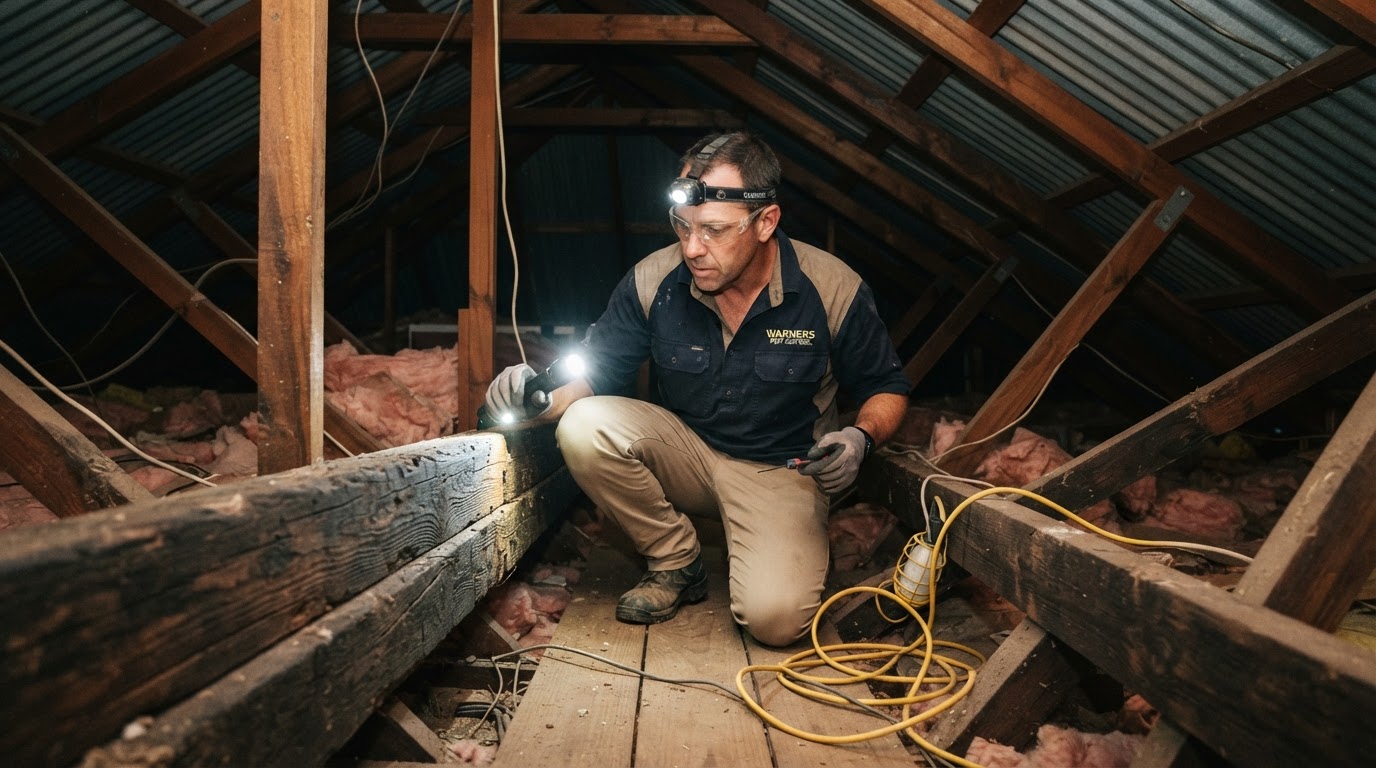
A professional inspection assesses accessible areas for evidence of activity and the conditions that favour termites. It establishes what, if anything, needs to happen next — treatment, prevention, or monitoring. Acting without inspection risks treating the wrong area or disturbing a colony in a way that makes later treatment harder.
Treatment depends on the property
The construction type, foundation, subfloor access, extent of activity, existing barriers and site conditions all influence which option suits. A chemical soil zone, baiting, dusting, foaming, nest treatment or monitoring each suit different situations, and combinations are common. No single approach is right for every building.
If termites are discovered
If you find termites, don't spray them or break open the affected timber. Disturbing active termites can cause them to retreat, making assessment and treatment more difficult. Arrange a professional inspection promptly so the situation can be assessed before any treatment is planned.
Why monitoring may continue after treatment
Termite management is not always a one-time event. Termites are persistent, conditions change, and no treatment can guarantee they will never return. Depending on the system used and the property's risk, ongoing inspections or monitoring may be recommended after treatment.
Practical prevention tips
- Arrange an annual inspection in termite-prone areas
- Keep timber off the soil — firewood, sleepers and offcuts away from the house
- Fix leaks and improve subfloor drainage and ventilation
- Use mulch sparingly near foundations
- Maintain any installed management or monitoring system
Questions we're asked
Is there one termite treatment that suits every home?
No. The appropriate approach depends on the construction, foundation, access, extent of activity and site conditions. We recommend based on what an inspection finds, not a fixed product.
Can a treatment make my home permanently termite-proof?
No treatment can guarantee termites will never enter a property. Treatment addresses current activity and adds protection, but ongoing inspection and prevention remain important.