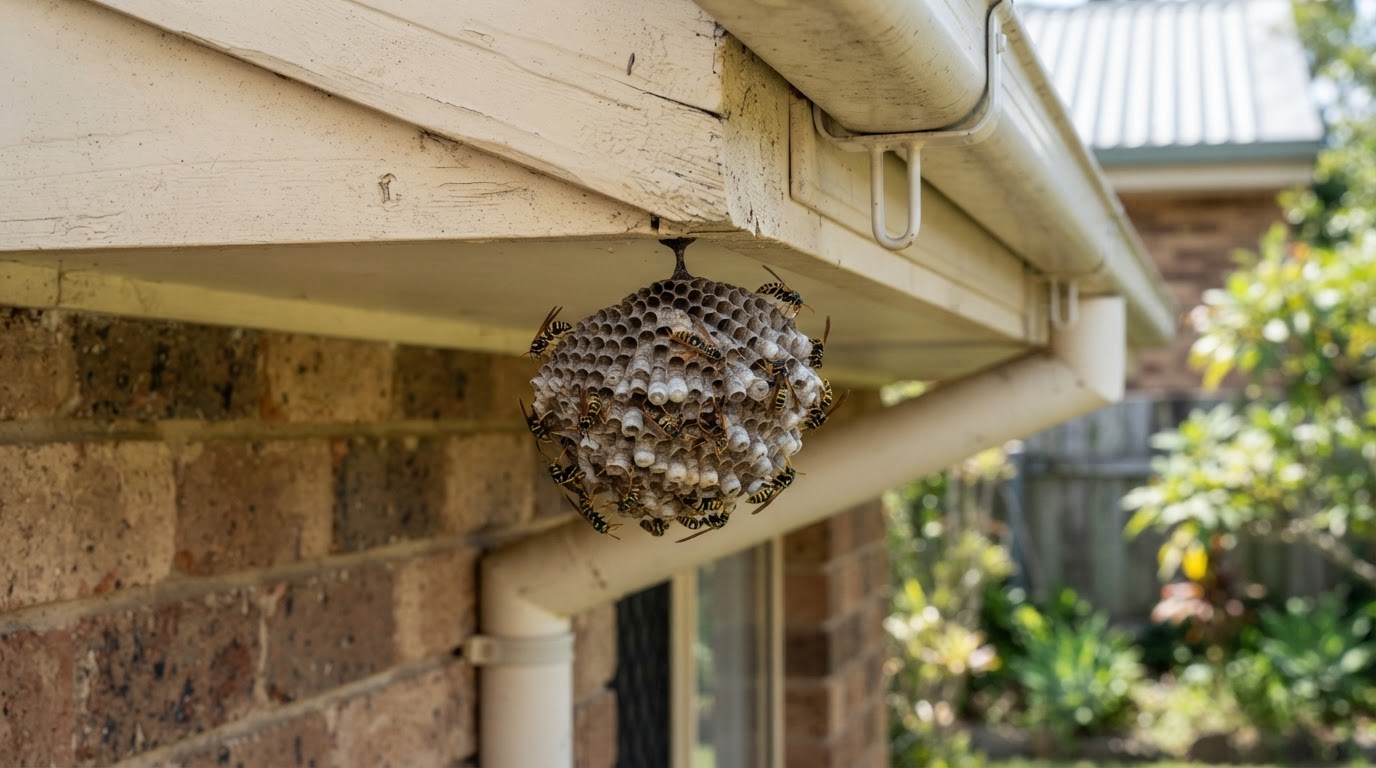
Common signs
- A visible nest or papery structure
- Steady wasp traffic to one spot
- Increased wasps around eaves or garden
Typical areas
- Eaves & roof line
- Wall cavities
- Garden areas and sheds
Where wasps nest
Wasps commonly build nests under eaves, in roof spaces, in wall cavities and in garden areas. Steady wasp traffic to a single point is a good indicator of a nest.
Why not DIY
Disturbing a wasp nest can trigger aggressive defensive behaviour, especially in late summer when nests are largest. Professional treatment protects you from stings and is done with appropriate equipment.
How treatment works
We assess the nest location and treat it at the appropriate time of day. We'll advise on keeping people and pets clear during and after treatment.
Practical prevention tips
- Check eaves and sheds early in the season before nests grow large
- Seal gaps in walls and roof lines where wasps can access
- Keep outdoor food and drinks covered when eating outside
- Call early — small nests are easier and safer to treat
Questions we're asked
Are wasps dangerous?
Wasps can sting repeatedly and some people react strongly. A nest near living areas, especially with children or pets, is worth treating promptly.
What's the difference between wasps and bees?
Wasps are slimmer with brighter yellow/black patterning and feed on insects and sugars; bees are more robust and fuzzy. Bees are pollinators and handled differently — see our bee services page.