Common signs
- Considered where active termites are suspected in concealed voids
Typical areas
- Wall cavities
- Roof and subfloor voids
- Other difficult-to-access spaces
What termite foam treatment is
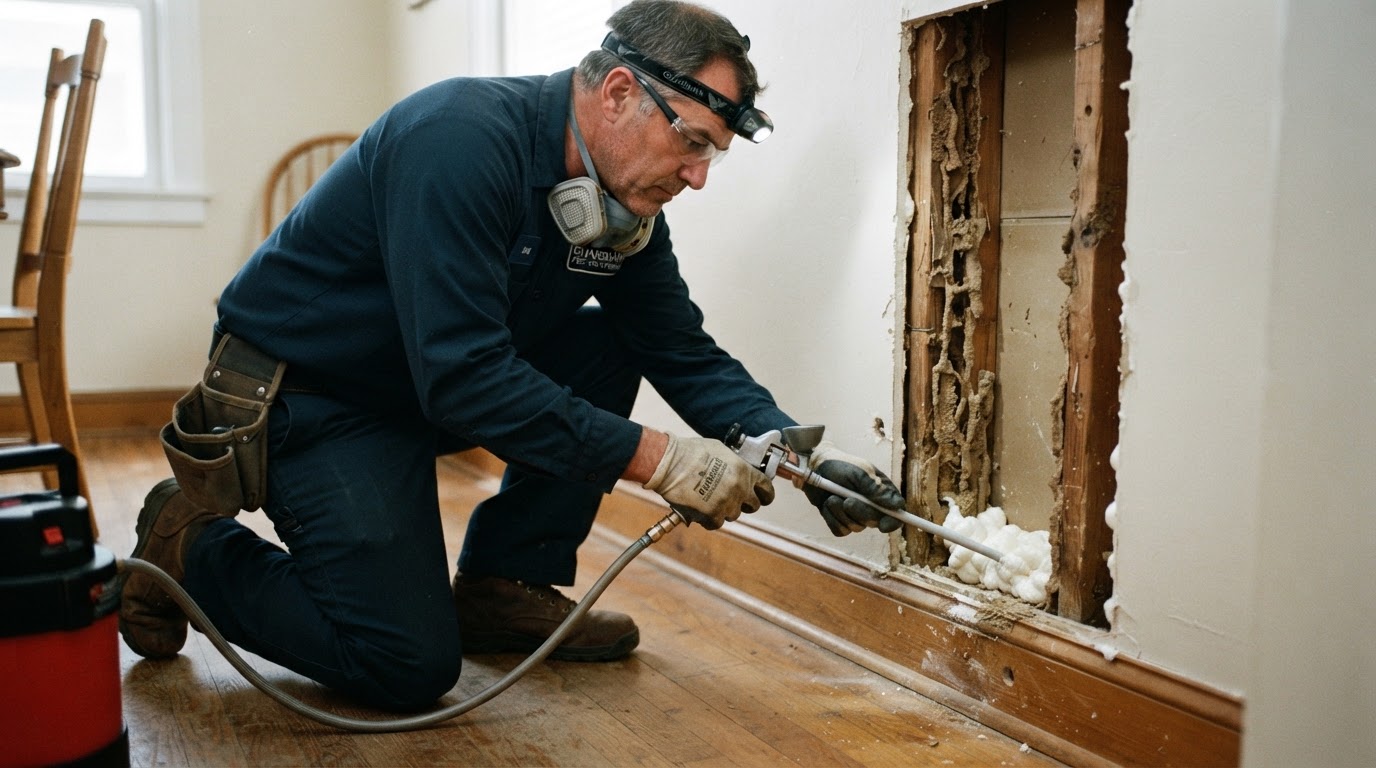
A treatment is applied as a foam that expands to fill the space it's directed into, contacting timber and surfaces within a cavity or void. It's a way of delivering treatment into areas that a liquid or dust wouldn't reach as effectively.
Why foam may be useful in concealed areas
Wall cavities, voids and difficult-to-access spaces are exactly where termites can go undetected. Foam can be directed into these areas to contact activity where it's suspected or confirmed, making it a useful option for targeted concealed-space treatment.
Targeted, not universal
Foaming is site-specific. How far foam contacts within a space depends on the cavity, access and application, so we won't overstate how far it travels or claim it guarantees colony elimination. It's one option, used where the situation suits.
Limitations
Foaming isn't suitable for every termite situation. Where activity can be reached directly, other methods may be preferred; where it's concealed in suitable voids, foam can help. A recommendation depends on what an inspection finds.
Practical prevention tips
- Follow up foaming with inspection to assess response
- Combine with management of conditions that favour termites
- Maintain any broader barrier or monitoring system
- Keep records of treated areas
Questions we're asked
How far does termite foam travel?
How far foam contacts within a space depends on the cavity, access and application, so we won't claim it reaches everywhere. It's a targeted option for suitable voids, assessed case by case.
When is foaming used?
Foaming is used where active termites are suspected or confirmed in concealed cavities and voids that other methods can't reach as effectively. It's not appropriate for every situation.