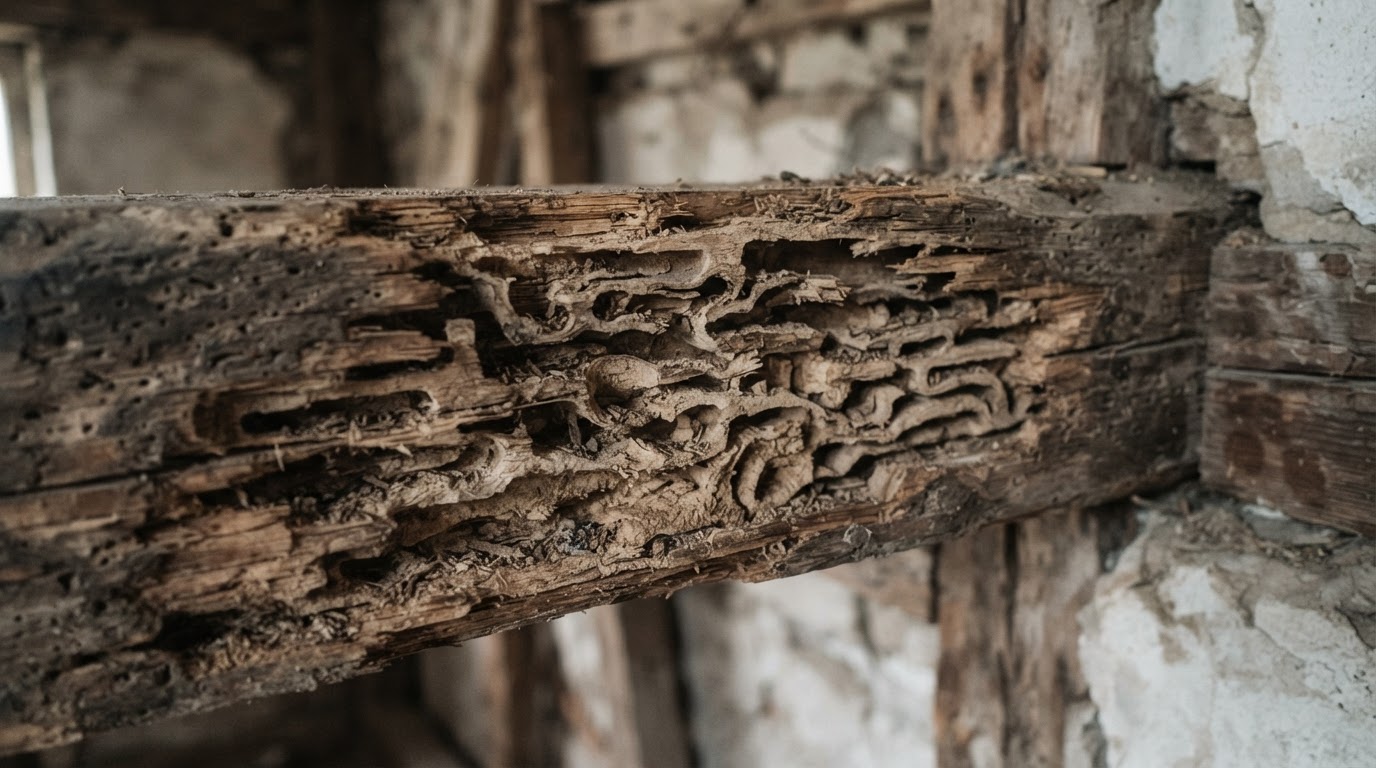
Common signs
- Used where accessible, active termite workings are present
Typical areas
- Active mud tubes and workings
- Damaged timber with live activity
- Lead-in areas where termites travel
What termite dusting is
A fine dust is carefully applied into active termite workings. Termites moving through the treated area pick up the dust on their bodies and transfer it through grooming and contact with other termites in the colony's workings.
Why access to workings matters
Dusting targets active termite areas, so it relies on being able to reach live workings — mud tubes, damaged timber or lead-in areas where termites are present. Where activity is concealed and inaccessible, dusting may not be the right option.
Where it may be useful
Dusting can be useful as a targeted step against accessible, active activity, sometimes ahead of or alongside other management. It's one tool among several and isn't suitable for every situation.
Limitations and what comes next
Dusting doesn't automatically mean the building has permanent protection. It addresses active termites that can be reached; follow-up inspection and a broader management strategy — such as a barrier, baiting or monitoring — are usually considered afterwards. Dusting should only be performed by trained professionals.
Practical prevention tips
- Don't disturb active workings before treatment — leave them intact
- Follow up with inspection after dusting
- Combine with prevention of conditions that favour termites
- Maintain any broader management system installed
Questions we're asked
Why shouldn't I disturb termites before dusting?
Disturbing active termites can cause them to retreat from the visible area, making it harder to target them. Leave workings intact and arrange professional treatment.
Does dusting protect the whole house?
Dusting targets accessible active termites; it doesn't by itself give the building permanent protection. A broader management strategy and follow-up inspection are usually considered afterwards.