Common signs
- A nest or colony source is suspected where activity traces back beyond the building
Typical areas
- Garden areas and soil
- Trees, stumps and retaining timber
- Other concealed nest locations
Why finding the nest can be difficult
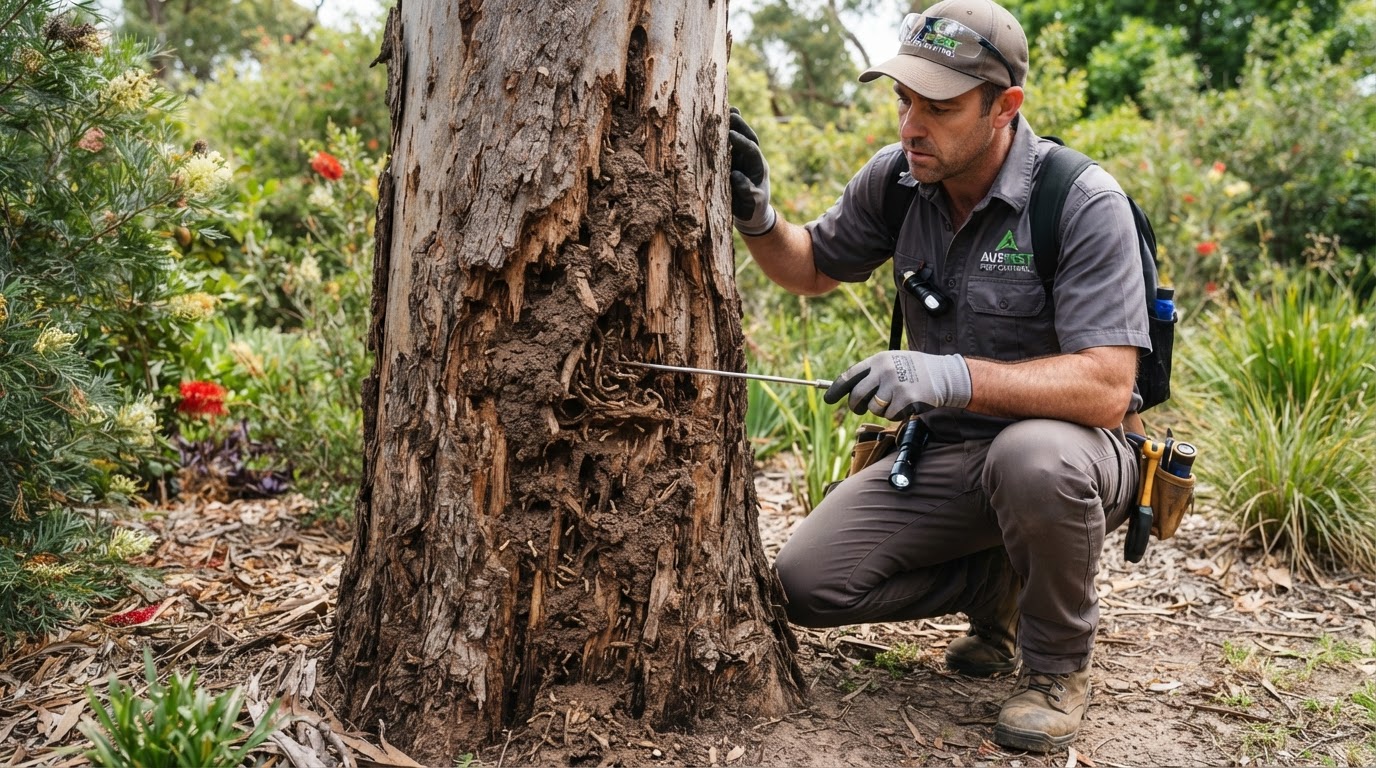
A termite nest isn't always in or near the building. It may be in a tree, a stump, the soil or another concealed location some distance away. Tracing activity back to a nest takes experience and isn't always possible.
Where nests can be found
Potential nest locations include garden areas, trees, stumps, soil and retaining timber. Identifying a likely nest source matters because it can inform the treatment approach — but a nest can't always be located.
When nest treatment may be appropriate
If a nest is located and accessible, treating it can form part of management. The recommendation depends on the actual site — whether a nest is found, where it is, and how it relates to the building's activity.
Honest limitations
Not every infestation has a nest that can be found, and treating one visible nest doesn't automatically protect the house from other colonies or future activity. Nest treatment is one option within a broader strategy that usually includes inspection, prevention and ongoing monitoring.
Practical prevention tips
- Manage tree stumps and dead timber on the property
- Keep up regular inspections, especially in termite-prone areas
- Combine nest treatment with broader management
- Address conditions that favour termites around the home
Questions we're asked
Can termites be found in trees or garden beds?
Yes. A termite nest can be located in a tree, stump, soil or garden bed some distance from the building. Tracing activity back to a nest isn't always possible.
If a nest is treated, is the house protected?
Not automatically. Treating one located nest addresses that source, but other colonies or future activity can occur. Broader management, prevention and monitoring remain important.